Chia Walnut Overnight Oats Recipe: A Nutritious Breakfast for Healthy Aging
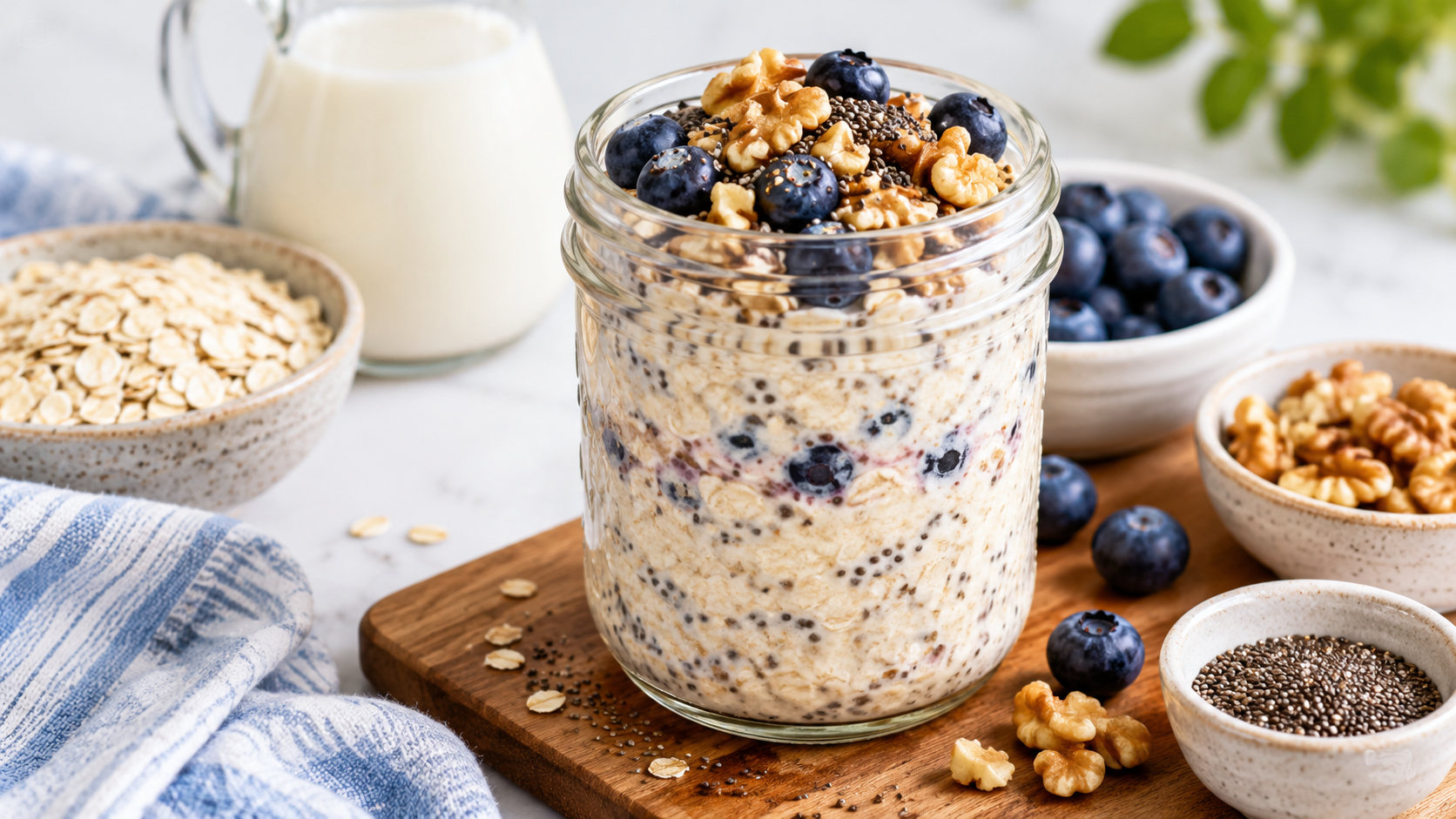
Looking for an easy breakfast that supports healthy aging and keeps your mornings simple? Chia Walnut Overnight Oats combines rolled oats, chia seeds, walnuts, and milk to create a creamy, satisfying meal that requires no cooking. Prepare it the night before, refrigerate it overnight, and enjoy a ready-to-eat breakfast the next morning.
This recipe provides dietary fiber, plant-based omega-3 fatty acids, and nutrients that can contribute to a balanced diet. For adults over 60, it is a practical way to include whole grains, healthy fats, and plant-based protein in everyday meals. The fiber in oats and chia seeds supports digestive health, while walnuts provide alpha-linolenic acid (ALA), an essential omega-3 fatty acid.
Although no single breakfast can prevent age-related conditions, eating a variety of nutrient-rich foods can help support overall health as you get older.
Chia Walnut Overnight Oats at a Glance
- Prep time: 5 minutes
- Refrigeration time: At least 4 hours, preferably overnight
- Total active time: Approximately 5 minutes
- Servings: 1
- Difficulty: Easy
- Cooking required: No
Ingredients for Chia Walnut Overnight Oats
This recipe makes one generous serving using simple ingredients commonly available in U.S. grocery stores.
| Ingredient | Amount | Purpose |
|---|---|---|
| Old-fashioned rolled oats | ½ cup | Provide whole grains and dietary fiber |
| Milk of choice | ½ cup | Adds moisture, protein, and other nutrients depending on the variety |
| Plain Greek yogurt | ¼ cup | Adds protein and creates a creamier texture |
| Chia seeds | 1 tablespoon | Supply fiber, ALA omega-3 fats, and minerals |
| Walnuts, chopped | 1 tablespoon | Add healthy fats, texture, and flavor |
| Cinnamon | ¼ teaspoon | Adds warmth and natural flavor |
| Maple syrup or honey | 1 teaspoon, optional | Adds sweetness |
| Vanilla extract | ¼ teaspoon, optional | Enhances flavor |
Optional toppings: Add sliced banana, fresh blueberries, strawberries, or a few extra walnut pieces before serving. These ingredients provide variety and can make the breakfast more appealing without requiring complicated preparation.
For a dairy-free version, use an unsweetened fortified soy beverage and a suitable plant-based yogurt. Check the nutrition label because protein, calcium, vitamin D, and added sugar vary among products.
How to Make Chia Walnut Overnight Oats
Step 1: Combine the dry ingredients
Add the rolled oats, chia seeds, cinnamon, and chopped walnuts to a clean jar or container with a lid.
Stir the ingredients together so the chia seeds are evenly distributed. This helps prevent them from forming dense clumps as they absorb liquid.
Step 2: Add the milk and yogurt
Pour in the milk and add the Greek yogurt. Stir thoroughly until the oats are coated and the mixture looks evenly combined.
Add the vanilla extract and optional maple syrup or honey. If you prefer a less sweet breakfast, leave out the sweetener and use fruit to add natural sweetness when serving.
Step 3: Refrigerate overnight
Cover the container and place it in the refrigerator for at least four hours, ideally overnight.
During this time, the oats and chia seeds absorb liquid and soften. The result is a creamy consistency similar to a thick pudding.
For food safety, keep the mixture refrigerated at 40°F (4°C) or below rather than leaving it on the kitchen counter overnight.
Step 4: Stir and adjust the texture
In the morning, remove the container from the refrigerator and stir the mixture.
If it is too thick, add one or two tablespoons of milk until you reach your preferred consistency. If it seems too thin, allow it to sit for a few additional minutes so the chia seeds can absorb more liquid.
Step 5: Add your favorite toppings
Finish with fresh fruit, a sprinkle of cinnamon, or a few extra chopped walnuts.
Enjoy the oats cold, or warm them briefly in a microwave-safe container if you prefer a hot breakfast. Add a little milk after warming if needed.
How Chia Walnut Overnight Oats Support Healthy Aging
A balanced breakfast can contribute to daily nutrient needs, particularly when it combines whole grains, fiber, healthy fats, and protein. These ingredients have different roles in the body, and their benefits are best understood as part of an overall eating pattern.
1. Oats provide fiber for digestive health
Rolled oats contain soluble fiber, including beta-glucan. This type of fiber absorbs water and forms a gel-like substance during digestion.
According to the U.S. Food and Drug Administration, beta-glucan soluble fiber from oats and certain other whole grains can help reduce the risk of coronary heart disease when consumed as part of a diet low in saturated fat and cholesterol.
Oats also contribute to daily fiber intake, which supports regular bowel movements. This can be especially useful for older adults who struggle to get enough fiber from their usual meals.
Increasing fiber gradually and drinking enough fluids can help reduce gas or bloating when adding more oats and chia seeds to your diet.
2. Chia seeds supply fiber and plant-based omega-3 fats
Chia seeds are small, but they contain several nutrients, including fiber, protein, minerals, and ALA.
ALA stands for alpha-linolenic acid, an essential omega-3 fatty acid that the body cannot produce on its own. It must come from food. Chia seeds and walnuts are both sources of ALA.
Omega-3 fats are important components of a healthy diet. However, ALA should not be treated as interchangeable with the EPA and DHA omega-3 fats found in certain fish and seafood.
Chia seeds also absorb liquid and form a gel, which contributes to the creamy texture of overnight oats.
Practical tip: If you are not accustomed to eating chia seeds, start with a smaller amount and increase gradually as tolerated.
3. Walnuts contribute heart-friendly fats
Walnuts provide unsaturated fats, including ALA omega-3 fatty acids. Replacing some foods high in saturated fat with foods containing unsaturated fats can support a heart-healthy eating pattern.
Walnuts also provide a small amount of protein, fiber, and minerals.
For adults over 60, including a variety of nuts, seeds, and other plant foods can help diversify nutrient intake. The key is portion size: nuts are nutritious but energy-dense, meaning they provide a relatively large number of calories in a small serving.
If you have a walnut allergy or need to avoid tree nuts, omit them and consider pumpkin seeds or sunflower seeds if they are appropriate for your dietary needs.
4. Greek yogurt and milk add protein
Maintaining muscle mass becomes increasingly important with age. Protein supplies the amino acids needed for muscle maintenance and the repair of body tissues.
Greek yogurt generally contains more protein per serving than regular yogurt, although the amount depends on the product. Dairy milk also provides protein, calcium, and, in the United States, is commonly fortified with vitamin D.
These nutrients can help support a balanced diet for older adults. Calcium and vitamin D are particularly relevant to bone health, while protein contributes to muscle maintenance.
If you use plant-based alternatives, choose products that meet your nutritional needs. Unsweetened fortified soy milk is often a useful option because it typically provides more protein than almond or oat beverages.
5. Cinnamon and fruit add flavor and variety
Cinnamon adds flavor without requiring much added sugar. Fresh fruit contributes vitamins, minerals, and additional fiber.
Blueberries, strawberries, and bananas all work well in this recipe. Choose whichever fruit you enjoy and can access regularly.
Although cinnamon and individual fruits are sometimes promoted for specific health effects, this breakfast should not be considered a treatment for a medical condition. Its main advantage is combining several nutritious foods in one convenient meal.
Tips for Making the Best Overnight Oats
- For more protein: Increase the Greek yogurt or serve the oats with an additional protein-rich food.
- For a dairy-free breakfast: Use fortified soy milk and plant-based yogurt.
- For less added sugar: Skip the honey or maple syrup and use ripe banana or berries.
- For a crunchier texture: Add some of the walnuts immediately before serving rather than mixing them all in the night before.
- For a softer consistency: Refrigerate for eight hours or longer.
- For meal preparation: Assemble several individual portions, keeping each container refrigerated and adding fresh toppings shortly before eating.
If you prefer warm oats, transfer the prepared mixture to a microwave-safe bowl and heat it in short intervals, stirring between intervals. Add extra liquid as needed.
Considerations and Food Safety
Chia Walnut Overnight Oats can be a nutritious breakfast, but portion size and individual needs matter.
People with digestive sensitivity may experience bloating when increasing fiber too quickly. Start with smaller portions if needed, and drink enough fluids throughout the day.
Anyone with a tree nut allergy should avoid walnuts and prevent cross-contact with other foods. People managing diabetes can adjust the sweetener and fruit portions to fit their individual meal plan.
Refrigerate overnight oats promptly after preparation. As a practical food-safety guideline, prepare only the amount you can reasonably consume within a few days, keep the refrigerator at 40°F (4°C) or below, and discard the mixture if it develops an unusual smell, appearance, or texture.
This recipe is not intended to diagnose, treat, cure, or prevent disease. If you have specific dietary restrictions or a medical condition that affects your nutritional needs, consult a qualified healthcare professional or registered dietitian.
Frequently Asked Questions
Are chia walnut overnight oats healthy for adults over 60?
They can be a nutritious choice because they combine whole grains, fiber, plant-based fats, and protein when prepared with milk and yogurt. They can fit into a balanced eating pattern that supports healthy aging, although individual nutritional needs vary.
Can overnight oats help with digestion?
Oats and chia seeds provide dietary fiber, which supports normal bowel function. Increasing fiber gradually and drinking adequate fluids can help your digestive system adjust.
Do chia seeds and walnuts help reduce inflammation?
Both foods contain ALA omega-3 fatty acids, which play important roles in normal body functions. However, eating this recipe has not been proven to treat inflammatory conditions or relieve joint pain.
How much protein does this recipe provide?
The total depends on the milk and yogurt you choose. With ½ cup of rolled oats, ½ cup of dairy milk, and ¼ cup of plain Greek yogurt, the recipe may provide approximately 12–17 grams of protein before optional toppings. Check the labels of your specific ingredients for a more accurate estimate.
Can I make overnight oats without yogurt?
Yes. Replace the yogurt with additional milk or a suitable plant-based alternative. The texture will be less thick, and the protein content may be lower.
How long can overnight oats stay in the refrigerator?
For best quality, enjoy them within three to four days when continuously refrigerated in a clean, covered container. Add delicate fruit shortly before serving when possible.
Can I eat overnight oats every day?
Many people can enjoy them regularly as part of a varied diet. Rotate your fruits, seeds, and other toppings to introduce different nutrients, and adjust portions to your appetite and nutritional needs.
Final Thoughts
Chia Walnut Overnight Oats is a convenient breakfast that combines whole grains, seeds, nuts, and dairy or fortified plant-based alternatives. It takes only a few minutes to prepare and can be customized to suit different tastes and dietary preferences.
For adults over 60, the combination of fiber, protein, unsaturated fats, and other nutrients can contribute to a balanced eating pattern that supports digestive health, muscle maintenance, and overall well-being.
The most useful approach is to focus on consistency rather than a single so-called superfood. A varied diet, regular physical activity suited to your abilities, adequate sleep, and appropriate healthcare all play important roles in healthy aging.
Editorial and health disclaimer: This article is for informational and educational purposes only. It is not affiliated with any specific food brand or healthcare organization and does not replace individualized medical or nutritional advice.
Sources and review methodology: The nutritional information was developed using publicly available guidance from the U.S. National Institutes of Health, the National Institute on Aging, and the U.S. Food and Drug Administration. Established nutrient functions were distinguished from broader health claims that would require additional evidence. Protein and nutrient estimates are approximate and vary by product and portion size.
Last reviewed: October 18, 2026.